Author: fish1964

  • My Joint

    The NY Times has an interesting article about restaurants near hospitals. It talks about my favorite joint, the Waterfront Ale House (there are two, one in Manhattan and one in Brooklyn).

    Several people recommended the Waterfront Ale House in Kips Bay, a popular option for the families of patients at both NYU Langone Medical Center and Bellevue, along with the hospital staffs. It has become a bona fide foodie destination as well, thanks to the celebrity chef April Bloomfield, who has professed her love of Waterfront’s hot wings everywhere from Food & Wine to The Financial Times. Waterfront’s owner, Sam Barbieri, is a graduate of the Culinary Institute of America, and operates a smoker in Brooklyn, where the ale house has another branch.

    Amusingly, while I was at my favorite joint, my favorite bartender showed me that article and gave me my favorite beer. Then I read my RSS feed on my phone and saw this:

    The beer I was drinking.

    From Business Insider: How 16 Of The Oldest Companies On Earth Have Been Making Money For Centuries
  • George Will, Voice of Reason

    Conservative columnist George Will discussing the Central American children coming into American illegally:

    We ought to say to these children, ‘Welcome to America, you’re going to go to school and get a job and become Americans,’” Will said on the Sunday morning show. “We have 3,141 counties in this country. That would be 20 [children] per county. The idea that we can’t assimilate these 8-year-old ‘criminals’ with their teddy bears is preposterous

    For the record, Kings County (Brooklyn) could handle way more than 20…

  • The LEGO Theory

    I liked this post on innovation.

    Kids brains are so malleable even through teenage life, so it is important that strong connections be formed. What types of connections? Spatial awareness, complex imagination, and curiosity.

    These are the values that Lego bricks instill in young kids.

    I would argue that today’s LEGO is way too much, “here are the exact things you need to build X and here are the instructions”. When I was a kid we had a big box a LEGOs and just made whatever we could come up with.

    Innovation requires creativity.

    Which brings me to an old favorite, John Cleese discussing creativity (long but good).

  • Zero Rating

    I wasn’t aware this practice had a name, but I was already concerned how this was just as bad, or worse, than the anti-net neutrality fast lanes. This refers to when a mobile carrier says “we won’t count data to this app against your plan”.

    Fred Wilson, typically, is already thinking about it:

    But what all of this zero rating activity is setting up is a mobile internet that looks a lot more like cable TV than our wide open Internet. Soon a startup will have to negotiate a zero rating plan before launching because mobile app customers will be trained to only use apps that are zero rated on their network.

    I strongly encourage policy makers, policy wonks, internet activists, and anyone who cares about protecting an open internet for all to take a hard look at zero rating. Like all the best scourges, it’s a wolf in sheep’s clothing

  • More Walls With Holes

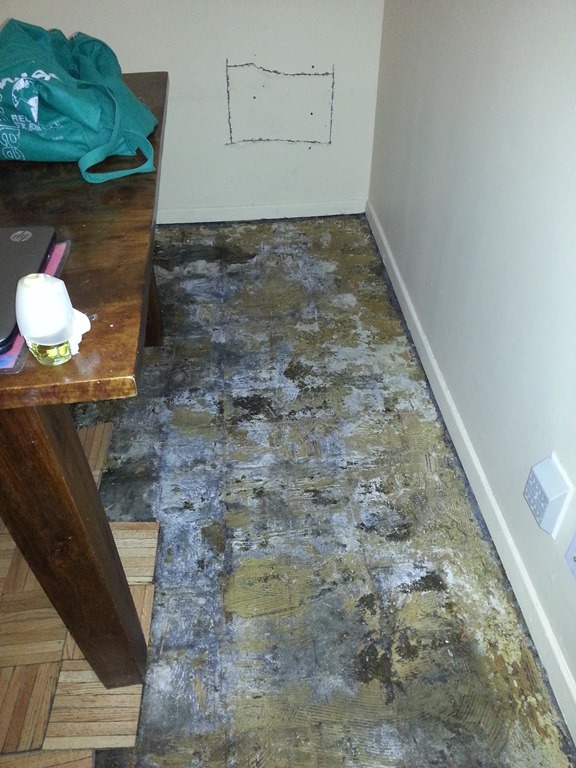
    Or more accurately, more holes in walls. The saga continues. We are up to four holes and our superintendent “thinks” he knows where the leak is now.

    So tomorrow morning he comes back, shuts off water in our kitchen, and hopefully fixes it. Because this is getting old…

    20140730_190636

  • Walls Should Have No Holes

    For the tiny minority who care about my personal blogs, an update to the Floors Should be Flat post.

    The follow up truth is that the leak was not due to their dishwasher and the “fact” that they had a dishwasher leak wasn’t even true. That was a big fat red herring.

    The reality is that the building has a pipe leak somewhere which caused both leaks. Unfortunately they haven’t figured out exactly where the leak is.

    So now we have two holes in our walls to expose the pipes that are leaking (but only occasionally). Our superintendent cut them but couldn’t determine the cause this afternoon so he’s showing up early tomorrow because the leaks seem to be caused by showers upstairs. Hopefully he can figure it out.

    The good news is that the building will pay for all of this. The bad news is that it’s going to get worse before it gets better…

  • What Should an eBook Cost?

    Back to the Amazon/Hachette dispute. Again, I am not an expert here.

    Amazon says eBooks should be $9.99. They obviously have a lot of data on this. That’s what they do. And they’ve concluded that a book at $9.99 earns more than the same book at $14.95 because more people buy it. And it’s not like there’s added cost to producing one more eBook.

    That’s a really important concept. Each physical book costs at least X, but after the first one, the cost of producing an eBook is just keeping the website up.

    As a software developer I’m quite familiar with this concept. Once the software is built, for a subscription web product, additional user licenses are basically all profit. We like license revenue.

    It sounds like this dispute is completely over the book price. Hachette apparently wants $14.99 with the extra margin (for them). Amazon says $9.99. It is not about the percentage that Amazon takes. They want 30%, which is pretty standard (see Apple).

    I’ve become more and more on Amazon’s side here. Hachette has been getting their authors to publish scathing comments about Amazon and Amazon has largely remained silent. Today they posted a blog explaining their position:

    A key objective is lower e-book prices. Many e-books are being released at $14.99 and even $19.99. That is unjustifiably high for an e-book. With an e-book, there’s no printing, no over-printing, no need to forecast, no returns, no lost sales due to out-of-stock, no warehousing costs, no transportation costs, and there is no secondary market — e-books cannot be resold as used books. E-books can be and should be less expensive.

    And they save the Hachette slam for the end:

    One more note on our proposal for how the total revenue should be shared. While we believe 35% should go to the author and 35% to Hachette, the way this would actually work is that we would send 70% of the total revenue to Hachette, and they would decide how much to share with the author. We believe Hachette is sharing too small a portion with the author today, but ultimately that is not our call.

    I translate that as “greedy Hachette bastards”…

  • #ARSENALNYC

    Arsenal (English Premier League) is playing a “friendly” against the NY Red Bulls. Arsenal produced this video, with their players trying NY accents (“are you talking to me?”).

    Hilarious.

  • Diversity (or lack thereof) in Tech

    Twitter followed Google, LinkedIn, Facebook and Yahoo and released stats on workplace diversity. First of all, what other companies are doing this? So even if the stats are bad, transparency is a step forward.

    The charts are below. To me they are not surprising.

    My undergrad degree is in music and I did a masters in Comp Sci (which I frankly didn’t finish). I went to Brooklyn College for my masters. It’s a good school overall. It’s part of CUNY, which is the City University of NY. It’s a good university system, but it’s fundamentally inexpensive for city kids (did I mention I was a musician? not swimming in money).

    You would think that the expensive schools would be the most exclusive and the cheaper city colleges would be more diverse.

    You’d think.

    A representative class for me at Brooklyn College (yes, a while ago) had about 30 people. There would be one African American, and generally it was a truly African immigrant. There would be one woman (typically Russian). And there’s be a bunch of white guys and Asian guys.

    I don’t know why this is true. But I’ve been in tech for a long time. I’ve asked recruiters to try to send more diverse candidates. I’ve never seen a good ratio.

    So I guess I’m saying, don’t bash Twitter (or the others). They are admitting it’s an issue and showing the bad stats. That’s the first step.

    I can’t answer the race part of this. I can say that I encourage my daughters all the time to get technical. Danielle is like me, a math whiz. She will not allow anyone to tell her “girls aren’t good at math”. We’ve been very clear that she should be kicking all boys butts in math.

    Verizon has some good commercials on this topic. It’s a long fight. Tech is tech. Smart wins. But it will take a while…

    Twitter Stats: