Category: Technology

  • First and Best Customer

    This is an excellent article discussing Amazon’s strategy with the Whole Foods purchase and why most people aren’t looking at it the right way.

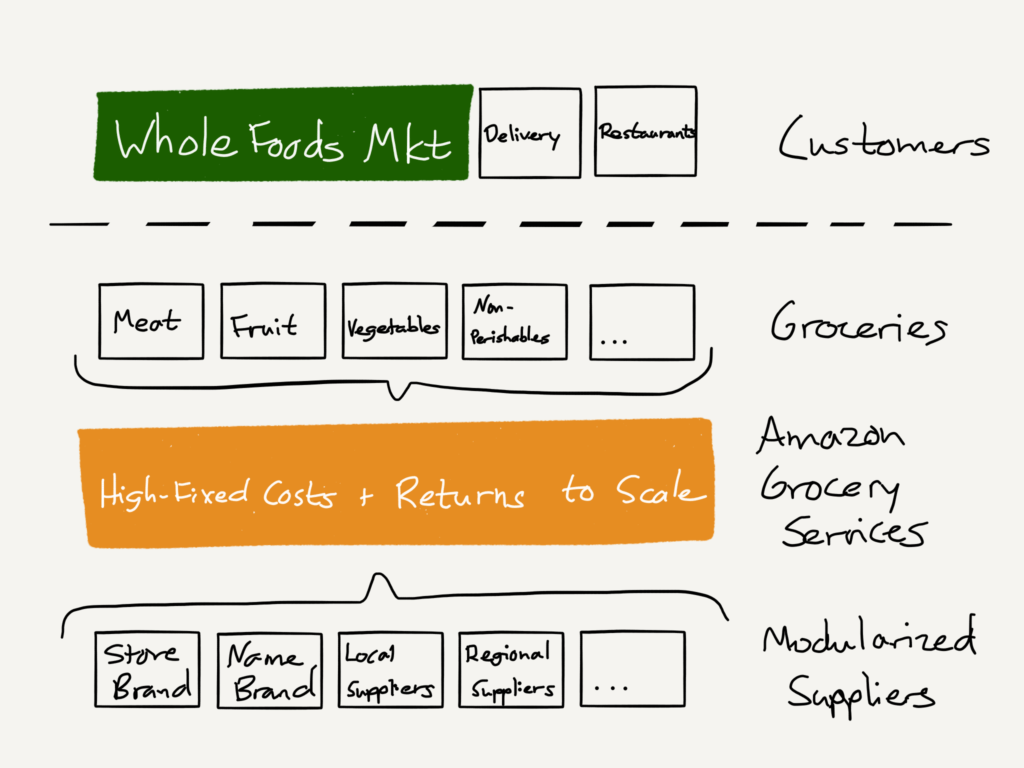
    The Amazon fulfillment centers for product distribution and AWS for cloud computing are large scale projects. They have huge initial costs but benefit tremendously from scale. One reason they succeeded is that Amazon itself was the “first and best customer” of those services, guaranteeing large scale.

    Amazon is building out a delivery network with itself as the first-and-best customer; in the long run it seems obvious said logistics services will be exposed as a platform.

    This, though, is what was missing from Amazon’s grocery efforts: there was no first-and-best customer. Absent that, and given all the limitations of groceries, AmazonFresh was doomed to be eternally sub-scale.

    That’s where Whole Foods makes sense. If Amazon wants to build Amazon Grocery Services, they need a first and best customer. You don’t normally think of an acquisition in terms of buying your customer, but that’s what just happened.
    stratechery-year-one-270-1024x768


  • Origami Risk – Better than AirPods

    Regular readers of the blog may remember me promoting the fact that our company Origami Risk did very well in an independent software review. The key number to me was the “Net Promoter Score” (NPS), a marketing term I wasn’t familiar with. It basically rates how much your clients are promoting your product to their friends. In the survey, Origami Risk had a Net Promoter Score of 93. That sounds good since our nearest competitor had a 34, but I really didn’t have much context for the metric.

    Yesterday, John Gruber at Daring Fireball posted a link to a survey of Apple’s AirPods. It discussed how extremely satisfied AirPods users are and specifically talked about the NPS number:

    Apple’s Net Promoter Score for AirPods came back as 75. To put that into context, the iPhone’s NPS number is 72. Product and NPS specialists will tell you anything above 50 is excellent and anything above 70 is world class.

    Origami Risk, world class software, thank you very much.

    NPS.png

  • Wait But Why Meets Neuralink

    Regular readers know I’m a huge Wait But Why fan. Elon Musk is apparently also a fan and he has given Tim Urban (the blog author) tremendous access to learn about his latest venture Neuralink.

    call-1

    Neuralink and the Brain’s Magical Future may be the longest Wait But Why post ever, and that’s saying something. Carve out some time to read it. It breaks up into sections so read it over a couple of days. Just read it because it’s fascinating.

    I like how he breaks Elon Musk’s general company strategy down to this:

    elon-company-formula-1

    Tesla and SpaceX already do this. Here’s the SpaceX version:spacex-formula-1

    The blog post ultimately figures out how a BMI (brain machine interface) company fits this model. But in typical Tim Urban fashion, he zooms out and explains everything first.

    It’s long, but read it anyway…

  • Dayton? Who goes to Dayton?

    A comparison of Android Auto and Apple CarPlay. Spoiler, Apple sends the Canadians to Ohio…

  • The 265 members of Congress who sold you out to ISPs, and how much it cost to buy them

    Your browsing data is now for sale. Via The Verge (the 265 were all Republicans):

    The only people who seem to want this are the people who are going to make lots of money from it. (Hint: they work for companies like Comcast, Verizon, and AT&T.) Incidentally, these people and their companies routinely give lots of money to members of Congress.

    So here is a list of the lawmakers who voted to betray you, and how much money they received from the telecom industry in their most recent election cycle.

  • The End Of The Level Playing Field

    This is an important post by Fred Wilson, a top VC…

    When the Internet came along in the early 90s, we saw something completely different. Here was a level playing field where anyone could launch a business without permission from anyone. 

    We had a great run over the last 25 years but I fear it’s coming to an end, brought on by the growing consolidation of market power in the big consumer facing tech companies like Google, Apple, Facebook, Amazon, etc, by the constricted distribution mechanisms on mobile devices, and by new leadership at the FCC that is going to tear down the notion that ISPs can’t play the same game cable companies played.

    It is certainly true that consumers, particularly low-income consumers, like getting free or subsidized data plans. There is no doubt about that. But when the subsidies are coming from the big tech companies, who can easily pay them, to buy competitive advantage over that nimble startup that is scaring them, well we know how that movie ends

  • Citi Bike + Blaze

    This is an interesting bike safety approach. Apparently this already exists for the bike share program in London. NYC is following suit and adding a laser light image of a bicycle on the ground about 20 feet ahead of the bike rider.

    Watch the video…

  • Prince Ruperts Drop

    You probably have to be geeky to enjoy this, but damn…

    And this is the equally awesome follow up:

  • Medium RIP?

    So Medium is laying off 1/3 of it’s staff. It’s a popular blogging site (I considered moving) so many tech folks are commenting about it.

    One of the founders of Basecamp wrote a fairly brutal post, Venture capital is going to murder Medium. You have to understand that Basecamp (formerly 37signals) is an uncommon tech proponent of the radical concept of charging for things and actually making a profit. I’ll put my biases on the table. Our company Origami Risk is 100% bootstrapped and profitable. We get to make decisions entirely based on what we think is best. There’s nothing wrong with VC money, but you have to know what you are signing up for. From the blog post:

    I don’t think we’ll grow old together, Medium and I. I suspect it’ll end quite tragic, actually. $132,000,000 is a lot of money after all, and that’s how much venture capital Medium has been dipped in. Before having a prayer or a song about how to turn into that multi-billion-dollar business it must to satisfy the required rate of return.

    The clock started running three years ago when $25,000,000 of Series A growth dynamite was rigged. That means they’re about half ways until the bomb explodes, and so far the company doesn’t seem much luck finding the code that’ll disarm.

    That’s the thing about taking VC money. They expect a nice return on investment, generally in about 5 years.